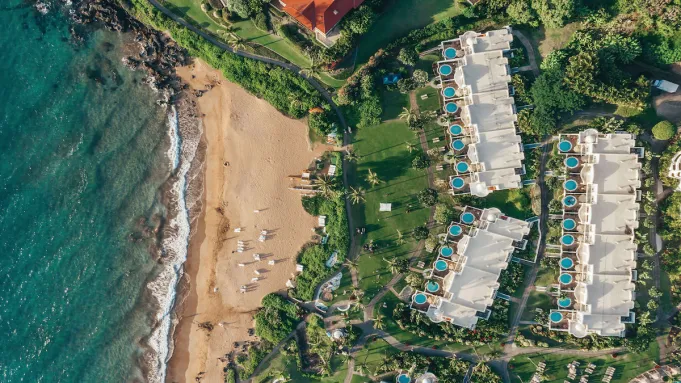
We knew we were ruined for life when we walked into our oceanfront suite at Wailea Beach Resort on Maui’s south shore and immediately spotted humpback whales breaching beyond the balcony. But which balcony should we watch them from? There were three, after all, which was coincidentally the same number of espresso machines in our extra-large connecting rooms. Despite our six-year-old’s assurances that “she loved coffee!,” she didn’t need the boost, thanks to the giant cookie-decorating welcome laid out in the kitchen. Two sugar cookies the size of dinner plates, in the shape of the letter “R” (for Redman), came with individual jars of frosting, chocolate shavings, and sprinkles in every color of the island. We were in absolute Hawaiian paradise in the middle of February, where the scent of plumeria mingles with the fresh salt-kissed sea breeze, and we didn’t leave our room for hours that first day at Wailea—we were having too much fun.
To proclaim that Maui, Hawaii‘s second-largest island in the archipelago, is a dream destination is like saying freshly baked cookies smell great. Can’t argue with facts. Maui was fit for Hawaiian kings and royal courts, notably Kamehameha I and his successors, who made the coastal town of Lahaina the capital of the Hawaiian Kingdom from 1820 to 1845. The island remains the dictionary definition of “lush,” from the tropical rainforest of east Maui, sliced by the Hana Highway, to the wild guava and papaya trees and native, endangered red-flowered Koʻoloaʻula (a type of hibiscus), once prized for lei-making.

Whale watching from a Wailea Beach Resort suite, one of four that opened in June 2025.
Laura Dannen Redman
Paradise is decidedly found: Malihini (visitors) continue to arrive by the millions each year to the point of overtourism. They—we—want to see the real Maui. Can that happen while holed up in a luxury resort, sipping coffee and watching whales from the balcony? Does a high-end experience overlap with an authentic one?
In 2026, it can, with eyes wide open. The real Maui is recovering from flooding this spring, and managing an ongoing housing crisis exacerbated by the 2023 wildfires that gutted Lahaina. To be a part of the greater ‘ohana (family) means being aware and not vacationing in a bubble. A next-level trip to Maui offers a chance to engage, not escape. The VIP treatment is still there—and it includes access to opportunities that will make core memories.
Among the international resorts making the greatest effort to curate these moments are the Hyatt Regency Maui on Ka’anapali Beach, a former royal retreat, and several properties within Wailea, a 1,500-acre luxury beachfront resort community connected by a mile and a half of flora-filled coastal walking trail. It would be easy to just shelter in place at the Four Seasons Maui, reliving White Lotus tropes, but if you want a trip that lands atop your “all-time best” list, consider adding in some of these Maui-only experiences.
Close encounters with whales

Today’s outrigger canoes are modeled after the wayfarer vessels that brought Polynesians to Hawaii.
Fairmont Kea Lani
Why watch a humpback from the balcony when you can get close—very close—in an outrigger canoe? Each morning from 7 a.m., when the ocean is as smooth as glass, Hawaiian guides take Fairmont Kea Lani guests out on a traditional outrigger canoe, fashioned after the vessels used by Polynesian wayfarers to get to the islands, for an hour’s paddle. Before pushing off from the beach, guides explain the deep spiritual connection the kamaʻāina (native born) have with the ocean and its inhabitants. They blow a conch and sing a chant, asking permission from the ancestors to enter the water, before everyone helps to heave the six-person canoe over the incoming tide. From there, everyone rows imua (forward), keeping eyes peeled for sea turtles, sea urchin, and on a really good day in January or February, a mama whale and her baby. If that happens (which it did the day before my outing), everyone stops paddling, sits still, and lets the whales circle, sussing out the visitors. It’s the closest possible encounter with Native Hawaiians’ spiritual guardians.
Snorkeling at Molokini Crater

Kai Kanani takes snorkelers to the superbly clear water around Molokini Crater.
Kai Kanai Sailing
Crescent-shaped Molokini Crater, a partially submerged volcanic caldera just three miles from Maui’s southwest coast, is considered one of the state’s best snorkeling and scuba sites. The water here is so clear, visibility extends 80 feet below the water, allowing divers and beginner snorkelers alike to spy some of the 250 species of marine life: red sea urchin and spiky black urchin, schools of yellow tang, giant coral that resemble big green brains, and closer to shore, the protected Hawaiian green sea turtle. Book a signature deluxe snorkel with Kai Kanani Sailing, a family-run business and the only ocean-loading snorkel tour in Maui. (Most tours depart from Māʻalaea Harbor, but Kai Kanani can load all ages onto its 65-foot catamaran from the beach and zoom over to Molokini Crater in about 20 minutes.)
We got to snorkel the lesser-visited back wall with a 200-foot drop—even the guides were excited. Better still: The sailing is full service, so guests don’t have to lift a finger onboard. Staff deliver hot cinnamon buns with honeydew from the local Spoon and Key Market, sandwiches piled high with barbecue chicken, and after the final snorkel session, adult beverages on the way back to shore.
Experiencing (many) Polynesian traditions at a luau
I asked a lot of locals where to find the best luaus on Maui, and their answer was usually the Old Lahaina Luau (for the most authentic Hawaiian storytelling) or Te Au Moana, a Polynesian celebration at Wailea Beach Resort. Meaning “The Ocean’s Tide,” Te Au Moana incorporates traditions from across Oceania, including the hula, a moving song about the moon goddess who protects Maui, fire dancing, a Māori haka, even a spirited Samoan dance mimicking the slapping of mosquitoes. It’s an immersive three hours on a beautiful lawn overlooking the water—primed for sunset photos—with a bountiful Hawaiian feast served: platters of sweet tarot rolls, pork roasted underground and served two ways, mahi-mahi, guava cake, tapioca… so much food, my kids completely ignored the chicken fingers and fries the servers brought as a precaution. During intermissions, women were encouraged to come get a flower in their hair (over the left ear means you’re taken, right ear means you’re single), and children tested bamboo stamps and did cartwheels beneath the moonlight. Photos weren’t even needed to keep this memory.
Learning to hula and play the ukulele

The Hale Kukuna center at Fairmont Kea Lani has three cultural ambassadors who teach everything from ukulele to lei making.
Brandon Barré
Sometimes, it’s the complimentary touches that resonate. Wailea Beach Resort leaves cards on your bedside table noting the Hawaiian Word of the Day (mahalo, ohana, ho’omau), and offers ukuleles for strumming in the lobby. Fairmont Kea Lani, still shiny post-2024 refurbishment, places culture front and center—just steps beyond reception—with its Hale Kukuna center. Here, guests can browse hula instruments, indigenous fishing tools, and pepper the super-knowledgeable staff with questions. “I’m here to educate, elevate, and perpetuate,” says Jobi Miguel, manager of Hawaiian culture at the center. “I just want people to be curious—to be open and join us with whatever questions they have.” How many hotels make free lessons in language, hula, lei making, and ukulele a round-the-clock endeavor? I can count on one finger. My daughter so loved the ukulele lessons, we promptly went out to Bounty Music—a Maui institution—and bought the ultimate souvenir.

The author’s daughters practice their new hobby.
Picking a pineapple in Upcountry
In the 1960s, Hawaii produced 80 percent of the world’s pineapple—the fruit was synonymous with the state—and on the slopes of Haleakala, Maui Gold Pineapple was queen, cultivating 10,000 acres of the sweetest fruit around. Sadly, Maui Gold is now the last pineapple farm standing on the island, down to 750 acres (300 of them planted), with just 20 people working the farm. It would have shut down entirely in 2009, if not for Rudy Balala, who started picking Maui Gold as a summer job in the 1970s, and Darren Strand, director of agriculture, buying the company and keeping the pineapple dream in Upcountry Maui alive. A Maui Gold pineapple farm tour ($95 pp) is a highlight of any trip: Balala himself, who retired last year after 47 years in the business, drives the van and spills the tea about the long, hard road to grow pineapples. And wow, how juicy that fruit is, plucked straight from the plant and carved by Balala with a machete. Everyone goes home with a box of pre-packaged, travel-friendly, fresh-off-the-stalk pineapple.

It can take 18 months to two years to grow fruit for harvest—this beautiful Maui Gold pineapples are just about ready to be picked.
Laura Dannen Redman
Wailea Beach Resort oceanfront suites start at $3,500 per night. Fairmont Kea Lani oceanfront three-bedroom villas start at $4,000 per night with complimentary valet and private concierge service. All rates are seasonally dependent.
-
Coastal Coin Necklace
$34.00 -
Resort Palmtree Necklace
$64.00 -
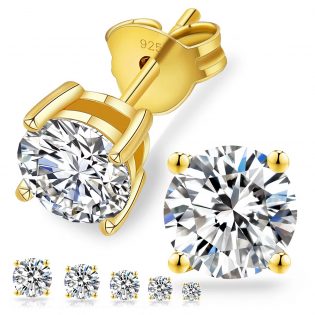
Oceanside Sparkle Studs
$38.00 -
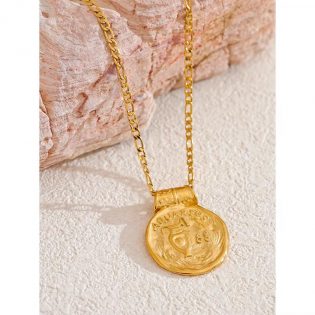
Coin Necklace
$34.00