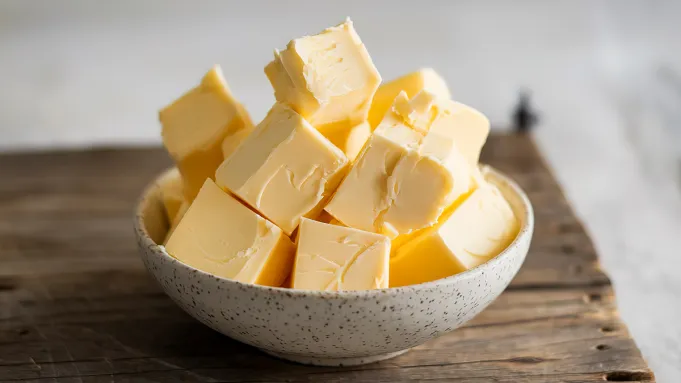
Over in Brittany, France, artisans handcraft what might be the world’s best butter, but with the right technique, you can make a great version at home.
That’s where Adam Byatt comes in. The Michelin-starred chef has created a helpful step-by-step video showing that it’s not that difficult to make outstanding butter in your own kitchen.
Byatt has been in the restaurant business for 35 years, working in kitchens once he got out of school. He opened his first restaurant in 2001 in Clapham, a district in southwest London and eventually debuted Trinity in the same part of town, which he’s owned and operated for 20 years. His Michelin-starred restaurant serves modern, seasonal English fare with some French influence. The last few years, on top of being a chef, he’s also been a bit of a star in his own corner of the internet, creating outstanding Reels and TikToks that translate his fine-dining techniques for home cooks. Additionally, like the chefs over at Fallow in London, he has launched a YouTube page where he gives in-depth tutorials on elevated dishes you can do at home.
While Trinity buys different types of butter—one for cooking and a more expensive brand for serving with bread—Byatt wanted to see if making his own butter from cream would get him a great product for less than the expensive stuff. He starts with a local, high-quality double cream that is at least 47 percent fat and emphasizes that the cream really is the most important part of the whole process. “Your butter will never be better than the cream you start with,” he says.
As for tools, Byatt employs a stand mixer with the whisk attachment, some plastic wrap to control splashing once the buttermilk separates from the fat solids, and a bowl of ice water to help rinse out the last remaining buttermilk. And the only additional ingredient to the cream is fine sea salt to season the butter. In the video below, he shows the pretty simple process of whipping the cream until it breaks and then forming the resulting solids into butter. He also breaks down the cost of buying versus making butter to see if it makes economic sense to do it yourself. But what’s a few extra quid if the butter tastes amazing, right?
Authors
-

Jeremy Repanich