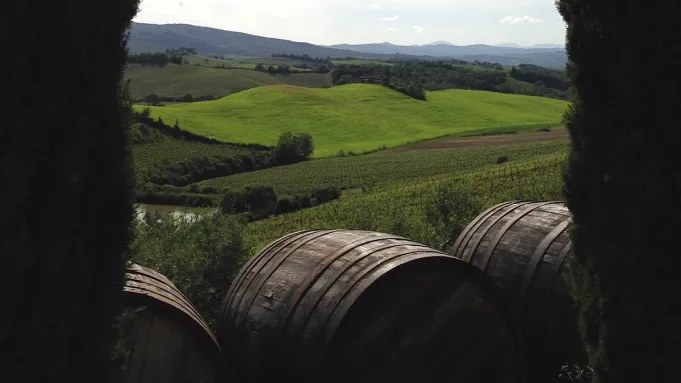
One of the smallest wine regions in Italy, the 92-square-mile Brunello di Montalcino DOCG is also among the country’s most highly regarded. With just 15 percent of its land planted to Sangiovese—known locally as Brunello for over 400 years—Brunello di Montalcino is often hailed as the pinnacle of the variety. While many of the best-known Brunellos are made with grapes harvested from a variety of sites neighboring the walled medieval village that gives the denomination its name, more producers each year are choosing to bottle expressions from single-vineyard sites, a phenomenon that has led to bottles that are better than ever.
One of the first and most famous is Altesino Brunello di Montalcino Vigna Montosoli, which was originally produced in 1975 and introduced the “cru” concept of vineyard-designate wines in the region. Altesino owner Alessandra Angelini credits the Montosoli vineyard’s Galestro soil, a type of flaky metamorphic-rock based clay that is prevalent in Tuscany, as the prime ingredient for a perfect Brunello vineyard. “Sangiovese loves this kind of poor soil type; it is what brings out the most elegant expression of the grape,” she tells Robb Report. Explaining that Galestro performs well in both wet years (when rainwater moves through the rock and settles deep underground) as well as in dry seasons (when deep-seated water reserves can be accessed by thirsty vines), she also credits the vineyard’s position at the top of the Montosoli hill for long hours of sun that help her grapes ripen to perfection. Angelini says at altitudes from just under 1,000 to 1,150 feet above sea level, the Montosoli vineyard is at “the perfect altitude to be outside of the morning fogs that may happen just before harvest and to have a nice cool evening breeze that gives the right balance of temperature variation between night and day to keep those perfumes and aromas blooming.”
Even 50 years on from the release of the first named single-vineyard Brunello, wine lovers have yet to become familiar with the differences in terroir throughout Montalcino. Angelini has a theory for why that is so: It is very complicated to understand if you have never been to Montalcino. “It is a tiny territory with a massive variety of landscapes, cultivations, wilderness, soil types, altitudes, and exposures. A few hundred meters can make a huge difference between one vineyard or another,” she says. “A minimal difference in altitude can also make a big difference. This is also the beauty of this amazing territory we are in.”

A pioneer in single-vineyard Brunello
Tenute Silvio Nardi
Galestro soil is one of the secrets behind Carpineto Brunello Riserva, made from a single north facing 2.5-acre site. Altitude is another key. Carpineto’s vineyard starts at 1,640 feet of elevation, and owner Antonio Michael Zaccheo calls the Riserva a true mountain Brunello. One of the last to ripen in the entire appellation, this vineyard is surrounded by thick woods that protect it from the warm and humid westerly winds. “The unique microclimate gives wines with intense bouquets, vibrant acidities, fine elegance, and great longevity,” Zaccheo says. “It is difficult to generalize in Montalcino because the soils change constantly, so even wines from the same general area can be somewhat different.” The multitude of soil types and aspect (direction the vineyard faces) can lead to wines that are “like night and day, on opposite sides of the spectrum, but equally delicious,” he says.
Another pioneer in single-vineyard selection Brunello is Tenute Silvio Nardi, which introduced its Vigneto Manachiara in 1995, followed by Vigneto Poggio Doria nine years later. While Silvio Nardi’s classic Brunello is a blend of 36 parcels of Sangiovese spread across two estates, one in the northwest and one in the southeast, these two single-vineyard expressions from the finest parcels of each vineyard offer what general manager Marco Paier calls “the best characteristics of each estate.” Tasting the 2021 vintage side by side recalls Zaccheo’s comment about wines that are like night and day. From a cool site whose name means “hill of sunset,” Poggia Doria offers an elegant expression of Brunello with red fruit, bold floral notes, and bracing acidity, while Manachiara—named for the morning sun—features opulent tannins, rich dark berry flavors, and a firm, full body.
Despite the differences in location and aspect, Paier says both are ideal for the cultivation of Sangiovese because “they combine a warm, Mediterranean microclimate with diverse, ancient soils, allowing the Sangiovese Grosso grape to achieve full ripeness while maintaining essential acidity, structure, and longevity in both sides.” Tommaso Cortonesi, a leader in single-vineyard Brunello, explains that Montalcino’s microclimate makes its bottles age-worthy. “While the wines have a noticeable structure when first released, they evolve in surprising and complex ways over time, setting them apart from Sangiovese produced elsewhere in Tuscany,” Cortonesi says.
Angelini is also the owner of Altesino’s neighbor Caparzo, where she produces her Brunello di Montalcino La Casa from the top south-facing side of the Montosoli hill. “The south-facing side means sunshine all day long; it’s like having the best expressions of the north and south side of Montalcino all in one vineyard,” Angelini says. “There is a special breeze all around this hill which makes the temperatures drop in the evening, the night and day difference of temperature brings out amazing perfumes.” With 12 vineyards in a variety of locations around Montalcino, she singles out the La Casa site for its ability to imbue her wine with a combination of elegance and power, two qualities that are often at odds. While she believes over time wine lovers will learn to appreciate the elements of different vineyard sites, Angelini doesn’t think Montalcino needs to formalize subdivisions in the appellation with MGA or cru designations. “In this moment I believe wine doesn’t need any more complications; it needs to be enjoyed and loved.”
Authors
-
Mike DeSimone and Jeff Jenssen

-
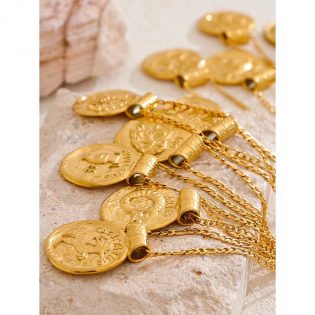
Coastal Coin Necklace
$34.00 -
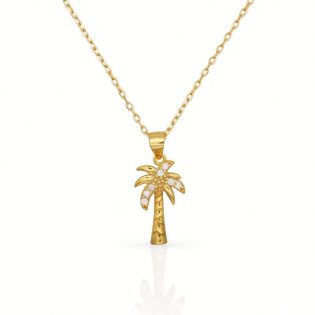
Resort Palmtree Necklace
$64.00 -
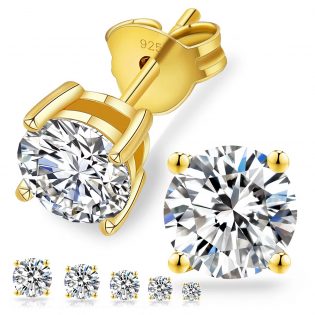
Oceanside Sparkle Studs
$38.00 -
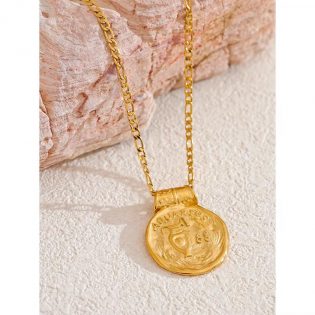
Coin Necklace
$34.00