The new status symbol in wellness isn’t six-pack abs, a cold plunge, or a biological age score that flatters the ego. It’s a faster brain at 4 p.m.
In a decade in which high performers are chasing longevity with peptides, cryotherapy, hyperbaric oxygen, glucose monitors, and hormone panels, the conversation is beginning to shift. Living longer isn’t enough. The new goal is to stay decisive, emotionally regulated, creative, and mentally quick in a world that seems to accelerate exponentially.
That’s fueling a boom in cognitive fitness programs at spas and hotels around the globe, from cognitive “add-ons” at medical wellness resort and industry leader SHA Wellness Clinic in Spain and Mexico to Clinique La Prairie’s week-long Brain Potential Program in Montreux, Switzerland, developed in 2024 in conjunction with the neuroimaging research group at Lausanne University Hospital. With both of these programs, better cognition comes in a spectacular setting—it helps make any lifestyle interventions go down smoother.
Other resorts are dipping a toe into the space, such as Larry Ellison’s Sensei Porcupine Creek properties outside Palm Springs and in Lana’i, Hawaii, which just launched a two-session Cognitive Foundations program in April.
And after several brain health retreats, Six Senses now runs a one-day Mind Your Brain program at several of its properties, from Fiji to the Seychelles, claiming to combat everything from brain fog to mental fatigue with activities like brain games, yoga, sound baths, and meditation. Brain health is now being treated less like a late-life concern and more like a performance metric alongside VO2 max, lean muscle mass, sleep efficiency, and metabolic health.
‘You rarely understand your brain, do you?’
As the pace of work has accelerated, many in the C-suite struggle to keep up. Deloitte’s 2024 workplace well-being research found that of the 3,150 C-suite executives and managers surveyed, at least four in 10 workers, managers, and executives “always” or “often” feel exhausted or stressed. Among the C-suite, 71 percent said they would seriously consider taking a job with another company if it better supported their well-being.
Another 2025 survey by executive coaching organization Vistage reported that 71 percent of CEOs have experienced some level of burnout in the past year, with 7 percent saying they face it nearly every day.
At SHA, the pivot to the brain began long before “cognitive optimization” became a luxury buzz phrase. “We created this area over 12 years ago,” says Alejandro Bataller, managing partner of SHA Wellness Clinics. At the time, clients were more focused on physical health; cognitive health had a sort of stigma, viewed by many as just a treatment for early-stage dementia. Now, Bataller says SHA is getting younger, healthy guests dealing with constant work demands who just want to stay as sharp as they can for as long as they can.
“They are looking for cognitive efficiency and resilience,” Bataller says. “They are looking for ways to optimize their cognitive capabilities.”
For Darren Yates, a 59-year-old London housing executive who has been to SHA Spain twice for its longevity program, the cognitive add-on was just a curiosity. However, after learning more about how his brain functions, cognitive health has become another metric he’s tracking, along with his LDL cholesterol, workouts, and hours of sleep.
During one cognitive session, he was hooked up to brain-monitoring technology while watching a documentary and speaking with a specialist. “She said, ‘Your alpha waves are off the scale,’” Yates recalls. He wasn’t sure what that meant, but two days later, he returned for a harder session involving maze-like screen tests. “You don’t actively do the puzzle—the brain is doing it for you,” he says. “I found it very interesting. You rarely understand your brain, do you?”
Yates learned that he scored high on the stress resiliency scale—meaning he can handle a lot of stress, but it’s still bad for him. The neurological consult also changed Yates’s view of sleep, nutrition, and the consequences of running on fumes. “Whatever, however much you train, unless you give yourself real quality sleep, you’re only ever working at 60 or 70 percent,” he says. He has since changed several daily habits: Yates starts his morning with miso soup and a vegetable-based breakfast; he’s more deliberate about switching off his phone and cutting down on multi-tasking; and he plans to return to SHA annually for a health reset and brain check-in. “It has changed a lot of things in my life,” he says. “If I went back, I’d have an hour-long [brain] session every day.”

Seeking mindfulness at Sensei Lanai.
At Sensei, the approach is intentionally less clinical and more lifestyle based. Its newly introduced Cognitive Fitness Collection, priced at $750 per person as an à la carte addition to a stay, begins with the foundations: sleep, stress, movement, nourishment, learning, and social connection. Guests complete cognitive-skills assessments that analyze the brain’s processing speed, visual memory, and executive functioning, then move into personalized drills and strategies.
“We were very thoughtful in terms of how we wanted to create the balance between technology and data,” says Meaghan Carlson, vice president of brand and marketing at Sensei. The idea was to use technology to provide “hard proof” around things like processing speed, visual memory, and executive functioning, and how simple levers like sleep, nutrition, and breathwork can affect that performance.
“There are no two sessions that are alike,” says Trevor Tellin, an executive performance coach who runs the Cognitive program for Sensei. “Someone may want to be more present. Someone may want to remember details in meetings. Someone else is incredibly competitive and wants to push and get better.”
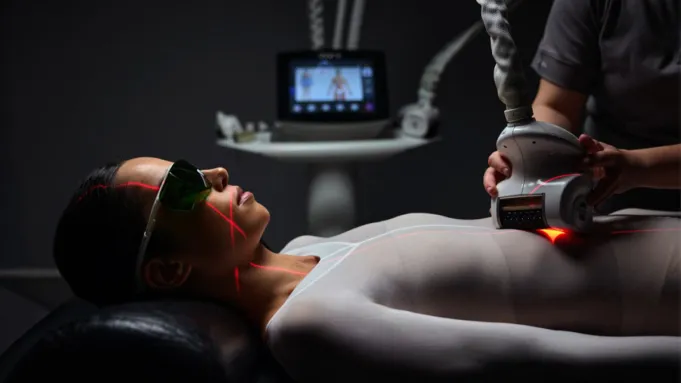
At many resorts such as SHA, the $1,500 cognitive pack goes a step further with transcranial electric stimulation (TES) and vagus nerve stimulation to get guests out of fight-or-flight mode and into a state of calm, as well as tech-based cognitive drills that track things like processing speed and short-term memory with simple games to gauge areas of weakness. Breathwork, movement, nutrition, sleep education, and, in some clinics, near-infrared light or photobiomodulation (red-light therapy) round out the treatments.
A generation of leaders who once measured success by endurance is realizing that endurance without clarity is a poor bargain.
While doctors and neurologists are on call at some resorts (including SHA), some programs and treatments may be more hype than help.
Spending on mental wellness has accelerated faster than the evidence base, encompassing everything from spa retreats to brain supplements, smartphone apps, and at-home devices. The Global Wellness Institute, which only began tracking mental wellness in 2020, estimates the industry will grow from $180 billion (in 2022) to $330 billion by 2027.
For now, cognitive fitness remains mostly a complement to broader executive health retreats: a layer placed atop longevity medicine, burnout recovery, sleep repair, nutrition, and movement. But it’s likely to become a core tenet. A generation of leaders who once measured success by endurance is realizing that endurance without clarity is a poor bargain.
“In general, it’s stress and sleep” executives need to work on, says Tammy Pahel, vice president of spa and wellness at Carillon Miami Wellness Resort, which runs circuits to address both in its 70,000-square-foot spa. “If those things are not addressed, longevity isn’t in your future.”
To be sure, comprehensive cognitive-fitness programs are still in their infancy, and promising better cognitive performance might be overselling. These retreats are, however, offering something subtler, and perhaps more valuable: a chance to see how the nervous system is performing before it fails, to recover before collapse, and to build the habits that make high output sustainable.
For CEOs used to running companies from the neck up, the next frontier of luxury wellness may be learning how to run the brain itself.
-
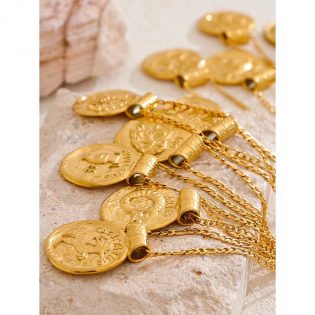
Coastal Coin Necklace
$34.00 -
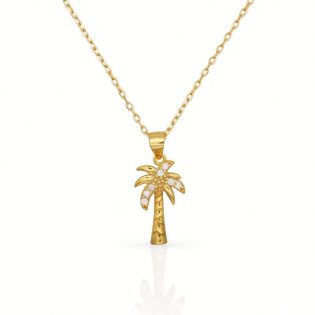
Resort Palmtree Necklace
$64.00 -
Oceanside Sparkle Studs
$38.00 -
Coin Necklace
$34.00