At Dubai Watch Week, which is increasingly becoming one of the watch industry’s most important events, the most serious conversations weren’t about limited editions or new watches. They centered on something far bigger: how watchmaking will navigate the economic, political, and generational turbulences now pressing in from all sides.
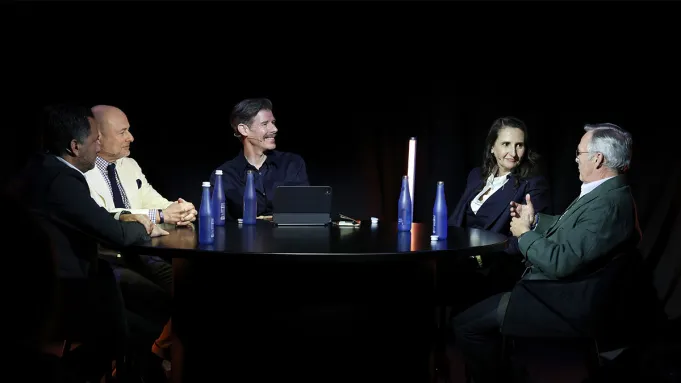
During a CEO roundtable featuring Audemars Piguet’s Ilaria Resta, Chopard’s Karl-Friedrich Scheufele, Breitling’s Georges Kern, and Hublot’s Julien Tornare, followed by a rare joint appearance from Rolex CEO Jean-Frédéric Dufour and Dubai Watch Week founder and Ahmed Seddiqi & Sons CEO Mohammed Seddiqi, a candid picture of the industry emerged.
This year made clear that leadership is thinking generationally, not just quarterly. The future will depend on talent, training, and transmitting savoir-faire. And companies are looking to younger demographics, women, and even new regions such as India to expand their foothold. Those that will remain steadfast to their purpose and bullish in their messaging could have the opportunity to come out of these turbulent times stronger than ever.
So, what’s the takeaway for collectors? The watches you buy today—whether from a heritage house or an ambitious independent—are born out of the most competitive environment in recent history. As a result, the leaders of the field are doubling down on craft, on engineering, on expertise, and on the very people who will build the watches we’ll be collecting 20 years from now. And what comes out of it could be the best sign for the future of mechanical watchmaking yet.
Below, are some of the takeaways from these conversations.
Tariffs Are Only the Surface of the Storm
The U.S. tariffs sent shockwaves through the Swiss industry earlier this year, but there is a glimmer of hope in the recent announcement these levies are to be reduced to 15 percent down from 39 percent. Nevertheless, the leaders onstage agreed the issues run much deeper.
Ilaria Resta, Audemars Piguet

Ilaria Resta, CEO of Audemars Piguet; the AP Royal Oak RD5
Resta described the current environment as “a perfect storm,” driven not only by tariffs but by the price of gold, the strengthening Swiss franc, and global political uncertainty. Even with tariffs lightening, she cautioned that unpredictability is far from over.
Karl-Friedrich Scheufele, Chopard

Karl-Freidrich Scheufele, co-CEO of Chopard
Photo by Christopher Pike/Getty Images
Scheufele echoed the sentiment. Although a 15 percent tariff is “more reasonable,” he noted this period ranks among the most challenging he’s seen in his decades-long career. Still, the U.S. remains critical for Chopard. “It has not been catastrophic,” he said of business stateside.
Georges Kern, Breitling

Georges Kern, CEO of Breitling; the Breitling Premier B21 Tourbillon
Kern pointed to China’s real-estate slump and economic strain in Europe as other factors outside of U.S. trade policy. Still, he sees upside: “The glass is half full… there’s an improvement in the States.”
Julien Tornare, Hublot

Julien Tornare, CEO of Hublot
Photo by Christopher Pike/Getty Images
Tornare broadened the lens—this isn’t just watches. Luxury as a whole is weathering pressure. But downturns, he argued, are also moments when strong brands seize opportunity: “It’s now that you can gain market share… really work hard for your brand.”
Why it matters:
Tariff talk can feel abstract, but these leaders are saying the quiet part out loud: pricing, allocations, and availability will remain volatile. Yet historically, periods like this have also yielded the most creative, ambitious watchmaking—because only the brands with commitment and clarity push forward.
The Industry’s Playbook for Resilience
If the first half of the conversation diagnosed the turbulence, the second half outlined the strategy.
Ilaria Resta: Purpose Over Panic
Resta emphasized the importance of staying the course. “Your destination, your purpose, your mission should stay true no matter what the external conditions are.”
She also highlighted a demographic shift collectors should note: “The average age of the first purchase of mechanical watches is going down… We see more new target clients getting interested, like women, and there are geographical white spaces such as India.”
Dubai Watch Week’s noticeably strong turnout from the Indian subcontinent underscored her point.
Georges Kern: Only the Strong Climb
Kern offered the most pointed assessment, comparing the industry’s moment to a steep incline in cycling (one of his hobbies). “Everybody can cycle flat… very few [excel] in the mountains.”
Then he invoked Warren Buffett’s well-known line: “Only when the tide goes out do you discover who’s been swimming naked.” In other words: strategy, discipline, and identity—not hype—will dictate which brands remain relevant.
Karl-Friedrich Scheufele: Think in Decades, Not Quarters
Scheufele reminded the audience that meaningful watchmaking by nature is a long-term venture. “If you are planning to launch a new movement . . . this may take five to 10 years.”
Chopard’s advantage, he noted, comes from being a family company with the flexibility to pursue long-term vision even when the numbers soften—an implicit contrast to publicly traded groups. “We do have more leeway, and you can say, Okay, I’m putting this through’ even if the numbers are not the right ones right now, because we believe in the future success of what we decided to do.”
Why it matters:
The greatest differentiator is long-term commitment. Brands investing now—into R&D, métiers d’art, complications, and vertical integration—will shape the next decade of watchmaking.
Jean-Frédéric Dufour: Investing in the Future of Watchmaking Itself

Jean-Frédéric Dufour, CEO of Rolex; the watchmaker’s Land-Dweller, its first all-new model line since the Sky-Dweller in 2012.
The most anticipated moment came when Rolex CEO Jean-Frédéric Dufour—who rarely speaks publicly—took the stage with Mohammed Seddiqi. His presence alone signaled the significance of Dubai Watch Week and the Seddiqi family’s influence.
Dufour addressed rumors and realities around Rolex’s evolving retail stance. While the brand acquired Bucherer in 2023, he reaffirmed that Rolex remains committed to its network of partners—even as the company shifts selectively into new retail expressions, such as its upcoming Fifth Avenue flagship (which, unfortunately, meant pulling out of its long-term retail partnership with the iconic Wempe boutique on the same stretch of Manhattan real estate) and a standalone Hamptons boutique operated by London Jewelers.
But the heart of his message was on a broader, more inclusive, goal.
On Education and Training
“We have… a college and more than 500 applicants in 26 different areas of expertise,” he said, referring to Rolex’s training programs.
Crucially, he added: “We know not all of these young kids will stay with us—some will work for other brands. We don’t really care. It’s an investment we do for the future.”
On Innovation and R&D
Dufour revealed that Rolex’s R&D department employs more than 2,000 engineers—a staggering figure that partially reveals the sheer breadth and influence of the brand.
On Inspiration and Public Engagement
He stressed the importance of major watch events: “They want to work for an industry that makes them dream,” citing the influence of big public events like Dubai Watch Week and Watches & Wonders that help spread the word. The watch industry’s biggest existential threat isn’t just tariffs, China, or currency swings—it’s the shortage of skilled watchmakers and engineers. Rolex is effectively underwriting the pipeline that will keep mechanical watchmaking viable for the next century. The largest watch brand in the world is betting heavily the industry’s future.
Authors

-
Coastal Coin Necklace
$34.00 -
Resort Palmtree Necklace
$64.00 -
Oceanside Sparkle Studs
$38.00 -
Coin Necklace
$34.00