This story is from an installment of In the Loupe, our weekly insider newsletter about the best of the watch world. Sign up here.
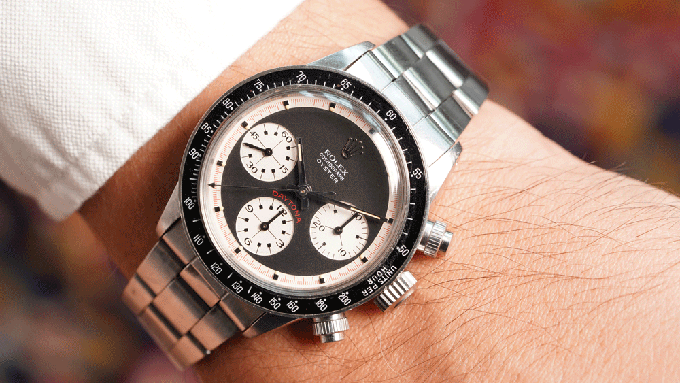
The pre-owned watch market is looking up. After 13 consecutive quarters of decline, prices of secondhand watches began ticking up in the third quarter of last year, and continued to do so through the fourth quarter, according to the latest edition of WatchCharts’s secondary watch market report, published in collaboration with Morgan Stanley.
For the year ending Dec. 31, secondary prices grew by 4.9 percent across the board. Compare that with 2023 and 2024, when full-year prices declined by 10.7 percent and 6.1 percent, respectively.
There is, however, a big caveat. The Big Three brands—Audemars Piguet, Rolex, and Patek Philippe—were almost entirely responsible for the growth, with the latter two brands leading in year-over-year performance (Patek Philippe prices grew by 12.1 percent, while Rolex prices increased by 4.6 percent). Omega and Cartier also stood out, with year-over-year price increases of 2.4 percent and 3.4 percent, respectively.
But here’s the cold, hard truth about the broader market: “Prices declined for 28 of the 35 brands we track,” said the report. The group-owned brands fared far worse than their independently owned counterparts, with LVMH, Richemont, and Swatch Group down year over year by 6.3 percent, 5.3 percent, and 1.5 percent, respectively.

A Patek Philippe Nautilus Ref. 5711/1A-014
Antiquorum
That said, the final quarter of 2025 was a bright spot. “For the first time in three years, gains were relatively broad-based, with prices increasing for 21 of the 35 brands we track,” said the report. Patek performed best, with a 7.6 percent increase in prices over the previous quarter, while Audemars prices rebounded with growth of 1.8 percent following three quarters of relative flatness. Rolex prices remained unchanged from the third to fourth quarters. Even the groups showed a modicum of improvement with Swatch Group, Richemont, and LVMH each posting gains of less than 1 percent.
When it comes to overall value retention, however, even the top performing brands couldn’t overcome the effects of persistent increases in retail prices, which have risen 7 percent on average since January 2025. “Consequently, value retention declined across all brands versus a year ago,” said the report. “While the Big Three continue to trade above retail, every other brand we track now exhibits value retention worse than 30 percent.”
As a result of the price increases in the primary market, many consumers have gravitated to secondary channels, and especially to brands that trade for significant discounts. That has resulted in an uptick in secondary market transactions overall. IWC and Tudor, for example, saw the value of secondary market transactions in 2025 grow by 17.8 percent and 21.8 percent, respectively.

An Audemars Piguet Royal Oak 14802ST
Chrono24
What does all this mean in a big-picture sense? For starters, it means that the pre-owned watch market has officially entered the post-post-Covid era, with 2025 serving as the inflection point.
“From 2022 through 2024, market dynamics were largely defined by the aftermath of the Covid-era watch bubble and the ensuing correction,” the report said. “By contrast, 2025 was shaped by broader macro factors, including higher retail prices (particularly in the U.S., driven by increased tariffs), rising gold prices, and a weakening U.S. dollar, which underpins all WatchCharts price trackers. Despite the inflationary pressure from these factors, secondary prices for the majority of brands continued to decline. We believe the value proposition offered by the secondary market is now stronger than ever for most brands, even as macro conditions deteriorate. Rising transaction volumes suggest demand remains healthy at the right price, with dealers prioritizing faster inventory turnover and accepting lower margins in a market increasingly driven by pragmatic consumption, rather than speculation.”
Not only is it a buyer’s market, it’s also one finally driven by fundamentals, not frenzy. Good times, indeed.
Authors
-

Victoria Gomelsky
-
Coastal Coin Necklace
$34.00 -
Resort Palmtree Necklace
$64.00 -
Oceanside Sparkle Studs
$38.00 -
Coin Necklace
$34.00