If wunderkind antiques dealer Jamie Sharp had a mantra, it might be this: “The more you look at something, the more it reveals. You always have to look a bit further.” At 25, the London-based dealer applies that belief as much to the objects he wrangles as to his client base, which is far-flung and global, with a particular pull toward America. Sharp sees a clear parallel between his market today and one that flourished more than a century ago.
During America’s Gilded Age, the era’s industrial titans—steel, oil, and rail magnates—turned to Europe for inspiration for their home decor and architecture. Fifth Avenue mansions and Pacific Heights palaces quickly filled with treasures from Parisian salons and Italian piani nobili. In today’s tech-powered gilded age, Sharp recognizes the same impulse. One client, an A.I. entrepreneur, slid into his DMs on Instagram to snap up something for his Northern California home. A “really brilliant pair of Italian 17th-century console tables,” Sharp recalls. “It wasn’t his wife or his decorator, but the guy himself, who clicked to pay.” Then there was the financier-turned-politician who is building a new home in the same region. He leaned on Sharp’s eye to anchor his interiors, ultimately acquiring a northern Italian fruitwood commode from the 1600s.

Dealer Sharp at his home in London—surrounded by antiques, of course.
Courtesy of Jamie Sharp
Sharp relishes facilitating these modern-day transatlantic exchanges, and he has built his young business around making them easier. Take shipping: While most dealers treat it as a negotiated extra, Sharp folds those costs into the sticker price. “It’s not a luxury experience, emailing back and forth about customs duties and fees, and frankly, it should be, when you’re spending thousands.” He applies the same logic to pricing. Every piece’s price is listed openly, not just available upon request. “I find that slightly disingenuous and not approachable,” he says. People are nervous about buying antiques because of that, with dealers sizing you up to give you a price.”
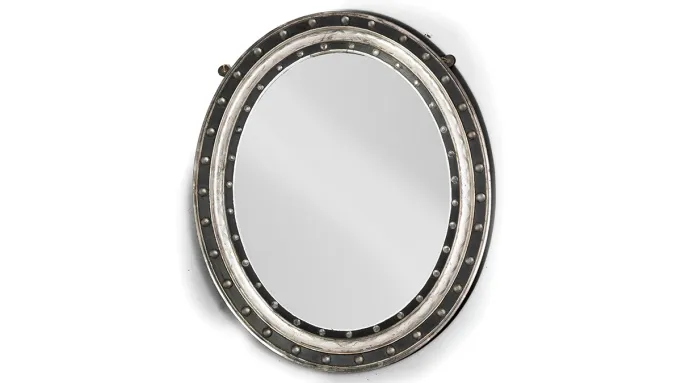
That philosophy made Sharp a natural partner for this month’s Vault offering. He sourced a pair of mirrors that he believes are destined for the same transatlantic journey made so many other antiques before them, a century ago and today, priced, as always, all-inclusive. Made in the early 1800s during the Regency period, they come from an era Sharp particularly favors. “It uses a lot of black and silver—curved lines—and is quite sexy,” Sharp says. For anyone testing antiques in a modern interior for the first time, he suggests starting there. “It’s a style that always looks brilliant and works well with that.”
Crucially, he adds, the mirrors were made in Ireland. Unlike the mainland, where design bowed to strict classical ideals, Irish makers were freer and more idiosyncratic. “English Regency is more elegant and restrained, while Irish is more exuberant and eccentric. That’s why I like the idea of it a bit more.”

When Sharp acquired the mirrors, they had not yet revealed their secret: rare silver-leaf finishing.
Courtesy of Jamie Sharp
These mirrors also embody Sharp’s look-further approach in other ways. After acquiring the pair, he noticed a missing glass stud and sent them to a trusted restorer who sourced a replacement from a broken mirror of the same period. While working, the restorer spotted an intriguing detail: Mirrors like these were produced both in gilt and silver, though the latter is far rarer. “They look more modern, too, as the gold ones are much more stuffy,” Sharp says. “And when these came to me, they were gold.”
The gilding, however, did not look original. The restorer suspected a later 19th-century addition and carefully scraped back a corner to see what lay beneath. His hunch was right—under the gold sat silver. Sharp was thrilled to see the pair transformed into these ebonized and silver-leaf pieces, rarer and sharper than anyone had expected. “They were much more beautiful than we would ever have thought.” $8,000
Authors
-

Mark Ellwood
-
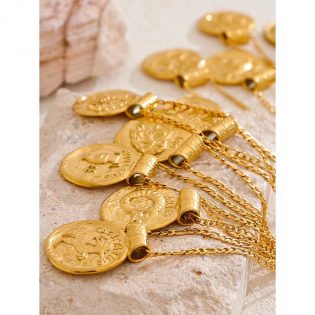
Coastal Coin Necklace
$34.00 -
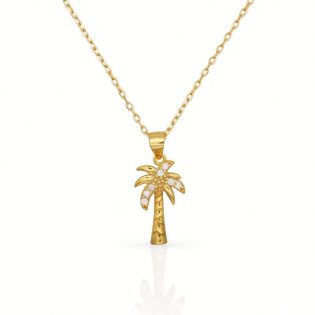
Resort Palmtree Necklace
$64.00 -
Oceanside Sparkle Studs
$38.00 -
Coin Necklace
$34.00