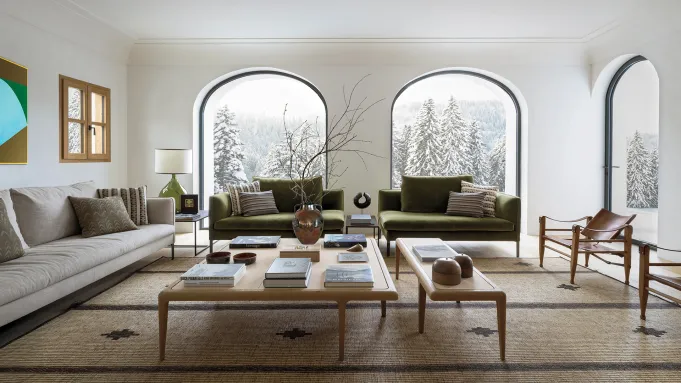
Since she was a kid, Emanuela Bozzi de Brabant has been going to the Engadin, a valley region of the eastern Swiss Alps. Less than three hours by car from her base in Milan, it’s where she learned to ski and where her parents have kept homes over the years. So when she and her husband, Matteo de Brabant, began spending time there during winters and summers with their four children, they didn’t feel they needed their own property; they would just stay with family.
But as their kids grew—they now range in age from 12 to 23—the pair decided that it made more sense to buy a retreat in their “favorite place,” as Bozzi de Brabant refers to it. And when Switzerland made it easier for foreigners to purchase property in 2018, they jumped at the opportunity, snapping up an older house in the center of the village of Celerina, a historic area just north of the more scene-y Saint Moritz. For the first couple of years, they inhabited the home as it was, original furniture and all. Meanwhile, they enlisted their close friend Matteo Tartufoli, an architect and cofounder of Milan’s M2P Studio, to help them reenvision their getaway.

Tartufoli and homeowner Emanuela Bozzi de Brabant studied the Engadin’s architecture and incorporated many classic elements into the new build.
Monica Spezia
The firm is known for both faithful restorations and innovative new builds, and in the beginning, the de Brabants weighed whether they wanted to renovate while keeping the original structure intact or knock down the whole thing and start fresh. They landed on the latter, given that both options would have ended up costing about the same. But rather than simply dreaming up a contemporary chalet with Tartufoli, Bozzi de Brabant and her husband decided to create a residence that felt both of its place and of a piece with the venerable homes that dot the Engadin landscape.
Bozzi de Brabant and Tartufoli spent time studying the local architecture, noting common features such as slightly sloped walls (she says it’s so the snow can slide down the facade) and small windows rather than large glass expanses or terraces. They ended up incorporating all of these components in the property. Tartufoli and his team even went out and measured the area’s traditional buildings so that they could get the proportions just right.
One of Bozzi de Brabant’s main inspirations was the work of architect Hans-Jörg Ruch, who’s credited with helping to forge the Engadin’s current aesthetic via his renovations of the region’s farmhouses and homesteads. “The main mood was to repeat typical and traditional things [so] that the house could [have been] built maybe 200 years ago, but it’s built now,” she says. “I like to say [it’s] a house forever and from ever.”

Vintage pieces like an ancient Engadin bench and table are sprinkled throughout.
Monica Spezia
After two years of ideation and three years of construction, the chalet was completed in April 2022. The winter-white structure blends in with the alpine snow while wooden slats across some of the upper-floor windows add depth and nod to the design of stables found in the area. But inside and out, wooden elements were used sparingly because they’re not typical of Engadin architecture; that choice makes the home unlike other mountain escapes you may see in Switzerland and Italy, Tartufoli points out. Another traditional aspect that his team prioritized: sgraffito, an ornamental technique in which decorative etchings are made on the exterior of the house, framing the windows. M2P Studio worked with an older artisan from the valley and his younger partner from Portugal to finish that project. The pair “are doing great things—the best in all the valley,” Tartufoli says emphatically. Considering what a vital feature sgraffito is, he adds, “they are one of the most important [contributors to] the atmosphere of the entire building.”
Inside, the home comprises four levels and approximately 3,400 square feet. Bozzi de Brabant’s favorite part of the house is the entrance, with its risciu-stone floor, although Tartufoli originally wanted to use a more classic parquet. Risciu is typically used outdoors in the Engadin; the homeowner had seen it used at Muzeum Susch and ended up finding the material herself. (In fact, despite studying business in school and working for ITA2030, a pro bono consulting firm that aids nonprofits, Bozzi de Brabant sourced all the interiors, with some input from interior-designer friends and Tartufoli.) A skylight brightens up the foyer from high above, and a personalized artwork featuring a map of the Engadin from her parents takes pride of place on the entry console—squint, and you might be able to make out the family’s little red car traversing the roads.
The couple decided to create a residence that felt both of its place and of a piece with the venerable homes that dot the Engadin landscape.

Tartufoli persuaded Bozzi de Brabant that a central fireplace would add a sense of mystery to the home.
Monica Spezia
Much of the layout stayed the same from concept to reality, but Bozzi de Brabant was persuaded to change her mind on one standout feature in the main room: the fireplace. Sitting between the living room and the dining room, it’s practically a piece of art, with the chimney seeming to float above the hearth. “In my opinion, I always thought [a fireplace] was on a side of a wall,” she recalls. “But there the architect convinced me and pressed me to construct it in the center… because his idea was that if you enter and you immediately see everything, you discover everything in only one view. You lose a bit of the surprise of the house.”
For his part, Tartufoli was thankful to work with clients who believed in him and his vision while also bringing an elevated aesthetic to the project themselves. “Half of architecture is the clients, half is the architect, always,” he explains. “In this particular situation, the family was great—they trust. ‘OK, we trust you. And we work together, but we trust you.’ ”
Other delights on the main floor include the custom sleek matte-black kitchen by Boffi—again inspired by a trip to the Susch—and the sculptural fabric lamp that hangs over the dining table, which Bozzi de Brabant found at Milan’s Rossana Orlandi gallery.

The matte-black kitchen was designed by Boffi.
Monica Spezia
En route to the top floor—where five of the seven bedrooms and four of the six and a half bathrooms are located—the stairs appear at first quite normal, with the initial two ascents made of wood. But the uppermost part is constructed of sheets of metal mesh, allowing light to stream down from above, all the way to the main floor. Bozzi de Brabant wanted to imbue the entire home with this sense of warmth, and the skylight motif shows up yet again in one of the bathroom’s showers, for example.
Wooden elements were used sparingly because they’re not typical of Engadin architecture.

From left: Bozzi de Brabant’s parents gifted her the custom artwork that sits in the entryway; the mesh stairs allow sunshine to filter down from the skylight above.
Monica Spezia
The aesthetic aligns with Bozzi de Brabant’s tastes throughout, but her husband, the founder of a data and A.I.-transformation company, is drawn to the lower levels in particular—because that’s where the fun is. Arches—another recurring motif—frame a sauna and a small indoor swimming pool. To shield the latter from the street outside, flowers and other foliage were planted to create a small forestlike privacy garden that blooms in the spring and summer. Adjacent to the pool sits a billiards room—or the dancing room, as she calls it, since it doubles as the setting for parties. Underfoot is the same stone found in the entrance, but on a larger scale.

The billiards room, with the same risciu-stone flooring as the entryway, adjoins a small indoor swimming pool and sauna.
Monica Spezia
Just as with the flooring, the homeowner was extremely focused on materiality during the entire process, prioritizing natural elements like stone and wood. She and Tartufoli’s team custom-designed the wardrobes, made of a fragrant Spanish cedar that she loved so much; she came up with a similar solution (but with Japanese bamboo) for her vacation house in Santa Margherita, on the Italian Riviera. The bathrooms were another collaborative effort, with Bozzi de Brabant and M2P Studio selecting the different stones used for the sinks. Tartufoli and his firm don’t typically do interiors, but in this case they allowed themselves to have a little more input than usual, tempering their preferences and expertise with what Bozzi de Brabant and her family desired. “We are a tailor,” Tartufoli explains: Giving the clients what they want is one of the biggest parts of the job. But so is landing on a harmonious blend of functionality and aesthetics. “The good balance about the brain and the heart—this balance for us is so important,” he adds.

From left: The risciu-stone floors were inspired by a trip to the local Muzeum Susch; Wooden elements were used sparingly because they’re not typical of Engadin architecture.
Monica Spezia
To let the architecture and the built-in elements shine, Bozzi de Brabant was relatively sparing when it came to furnishings and objects. She actually considers the interior walls one of the most artistic parts of the entire home: Lusciously painted walls are another Engadin signature, and she hired a Portuguese artist, rather than a housepainter, to complete the rich, textured expanses. “I always say that I paid more for the internal painting than the rest of the house,” she says with a laugh. Accordingly, she didn’t over-adorn the surfaces with art. “I paid a lot for the walls—I want to see them!”

A Giovanni Frangi painting is one of the few large artworks, as Bozzi de Brabant wanted to showcase the rich, textured interior walls.
Monica Spezia
Still, she has added meaningful touches throughout, including an antique cabinet in the dining room that was a gift from her parents for her 50th birthday. A couple of paintings bring bright pops of color to the living room, including a large blue wooded scene by Italian artist Giovanni Frangi. The cobalt shade is mirrored outside the home, where a wolf in the striking hue, from Italian artist collective Cracking Art, stands guard in the garden. More recent additions include two of Ingo Maurer’s iconic fan-shaped lamps—one in the billiards room and one in the primary bedroom—that Bozzi de Brabant acquired over the past year or so.
To let the architecture and built-in elements shine, Bozzi de Brabant was relatively sparing when it came to furnishing and objects.

Monica Spezia
The family enjoys the home year-round, and they’ve made sure that it’s just as welcoming to guests. Each winter, the couple organize a ski weekend for 16 of their lifelong friends, taking advantage of all the sleeping quarters, and their children have hosted similar gatherings. For Tartufoli, this is the most important thing: that his clients are happy with the space he has created for them. He, however, doesn’t always feel the same. “He’s really hard with himself when he designs something,” says Beatrice Blu Torti, an architect at M2P Studio who worked with him on the Engadin project. “He always tries to look for what could have been done better, or what if he [had done] something instead of how he actually made it?” But when asked what he wishes he could have done differently with the de Brabant house, Tartufoli is stumped. He admits that he wouldn’t change much of anything. Nor would she.
“I want to maintain it more or less like it is,” Bozzi de Brabant says. “It’s not a rich house, rich of objects. It’s more the house than the objects.”
Authors
-

Tori Latham
-
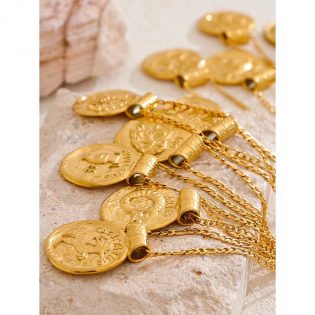
Coastal Coin Necklace
$34.00 -
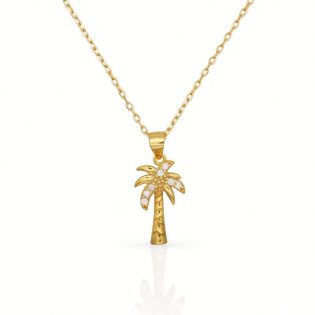
Resort Palmtree Necklace
$64.00 -

Oceanside Sparkle Studs
$38.00 -
Coin Necklace
$34.00