Welcome to Taste Test, where every week our critic Jonah Flicker explores the most buzzworthy and interesting whiskeys in the world. Check back each Sunday for his latest whiskey review.
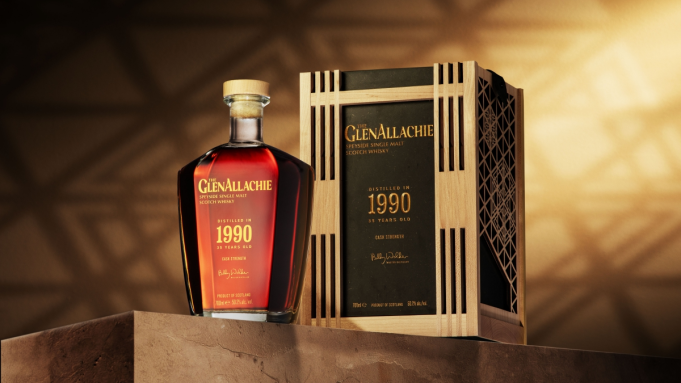
As I mentioned a few weeks ago, the race for the best whiskies of 2026 has started early this year, because there have already been some contenders that will definitely make the top 10, maybe even the top five. Single malt scotch has really been showing up, and there’s another fascinating and truly excellent prospect to consider—a 35-year-old, cask-strength whisky from Speyside distillery the GlenAllachie, which might be hard to find here in the U.S. but is absolutely worth tracking down.
The GlenAllachie is a relatively modern distillery in the world of scotch whisky, given that it’s only been around since the late 1960s. Like many distilleries, it was closed for a period of time, but has been making whisky steadily since the 1990s. In 2017, master blender Billy Walker and some partners purchased the GlenAllachie, and it underwent a rebranding and redesign just a few years ago.
This new whisky is a 1990 vintage that was aged for 35 years in four different cask types that were then blended together. According to Walker, the heart of the blend is virgin Japanese mizunara oak, which as I’ve discussed before is known to be a difficult type of wood to work with due to its porous nature, but can bring delicate flavors to a whisky. Of course, three and a half decades in mizunara is an exceptionally long time, especially when you’re talking about virgin oak. The recent Glengoyne Mizunara (another superb whisky) was finished for a full six years in this type of wood, but that pales in comparison to this particular component’s maturation journey.
The other types of casks are all just as important in creating this single malt’s character: American virgin oak, Oloroso sherry, and Pedro Ximénez sherry. While sherry casks are often used to mature single malt scotch, virgin American oak is much less frequently employed, especially compared to ex-bourbon barrels. Virgin oak, which is legally required to age bourbon, is much more reactive than refill casks; and just like virgin mizunara, 35 years is a very long time for a malt whisky to spend in these types of barrels.
The exact proportions were not revealed, but the result of combining all of this whisky aged in unique types of wood is nothing short of exquisite, especially at cask strength of 50.2 percent ABV. That’s 100.4 proof to us Americans, which doesn’t actually seem that high considering all the barrel-proof and hazmat whiskey we’re subjected to. But this is Scotland we’re talking about, not Kentucky. It should be noted that there is no real legal definition of “cask strength” in Scotland, so distilleries and producers can pretty much use the term as they please, but let’s assume that this whisky is indeed undiluted and bottled at the strength it came out of the barrel (or pretty close to it).
Pour some of this whisky in your glass and the first thing you notice is the color, a deep amber-brown with some heft and body to the liquid. The palate is a whirlwind of flavors, ranging from soft baking spice to floral incense to assertive oaky tannins to sweet vanilla. There is a touch of tropical fruit here, as you might expect from a whisky this old, but that’s relegated to the background, playing second fiddle to notes of dark chocolate, coconut custard, vanilla bean, red berries, prune, raisin, barrel-aged maple syrup, and deeply toasted almonds. There is some heat, but it’s minimal, really more of a warming finish that coats your throat and leaves a gentle lasting impression.
The GlenAllachie 1990 is an artful blend, with each component serving a specific purpose. This isn’t some ultra-aged vintage whisky that’s been released for posterity’s sake; there is a reason, a point of view, and a theme to this single malt. At around $1,500 per bottle, the packaging and presentation are as intricate as you’d expect—the whisky comes in a bespoke wooden case inspired by both Japanese and Scottish traditions. But it’s the liquid inside that is most important, and it’s worth the price of entry.
Score: 95
- 100 Worth trading your first born for
- 95 – 99 In the Pantheon: A trophy for the cabinet
- 90 – 94 Great: An excited nod from friends when you pour them a dram
- 85 – 89 Very Good: Delicious enough to buy, but not quite special enough to chase on the secondary market
- 80 – 84 Good: More of your everyday drinker, solid and reliable
- Below 80 It’s Alright: Honestly, we probably won’t waste your time and ours with this
Authors
-

Jonah Flicker
-
Coastal Coin Necklace
$34.00 -
Resort Palmtree Necklace
$64.00 -
Oceanside Sparkle Studs
$38.00 -
Coin Necklace
$34.00