
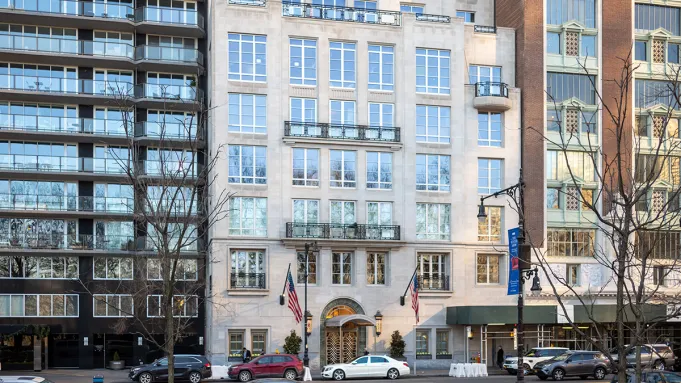
A new proposal in New York is turning renewed attention to the city’s ultra-luxury second-home market—and could introduce a new tax for owners who rarely occupy their Big Apple properties.
Governor Kathy Hochul has put forward a pied-à-terre tax targeting residences valued at $5 million or more that are not used as a primary home. In practical terms, owners of high-end apartments and townhouses that sit largely unoccupied—rather than rented out full-time—could face an additional surcharge.
Roughly 13,000 properties may fall under the proposal, many owned by individuals who live elsewhere but maintain a New York apartment as a second or third residence. State officials estimate the measure could generate at least $500 million annually as they work to close a budget gap.
Mayor Zohran Mamdani has been vocal in support, framing the policy as a way to target the ultrawealthy, describing it as a tax on those who “store their wealth” in New York real estate but do not live in the city full-time.
Hochul, for her part, has emphasized that full-time residents would be exempt. Instead, the proposal is aimed squarely at high-value homes that remain vacant for much of the year, with the argument that those owners should contribute more to city services.
RELATED: Manhattan’s $10 Million Condos Are Flying Off the Market—Even as Sales Slow Elsewhere

A proposed pied-à-terre tax would apply to New York City residences valued at $5 million or more that are not used as primary residences.
SammiJo/Getty Images
For the real estate market, the $5 million threshold is particularly significant. That cutoff could influence how homes are priced and marketed. It wouldn’t be surprising to see more listings land just below that mark, as both buyers and sellers seek to avoid triggering the tax.
That kind of pricing behavior isn’t new in New York. When new taxes are introduced, the market tends to adjust quickly—especially in the luxury segment, where there’s more flexibility to fine-tune numbers.
-

Featured Listing
111 W 57th St, New York, NY 10019
New York, NY
$98,000,000 USD -

Featured Listing
Paris, Île-de-France 75002, France
Paris, France
$21,201,400 USD | 18,000,000 EUR -

Featured Listing
The Westerly Estate: A Tuscan Villa in Paradise
Santa Ynez, CA
$52,500,000 USD -

Featured Listing
4867 Legacy Way, Park City, Utah 84060
Park City, UT
$22,000,000 USD -

Featured Listing
161 Stillwater Rd, Aspen, CO 81611
Aspen, CO
$300,000,000 USD
The idea of a pied-à-terre tax has come up before. It was floated unsuccessfully in 2014 and resurfaced in 2019 following Ken Griffin’s record-setting apartment purchase but ultimately stalled amid pushback from industry groups, including the Real Estate Board of New York.
Now the proposal is back. And while it’s far from finalized, it’s already giving buyers and sellers something new to factor in—particularly those considering a part-time home in the city.
Authors
-

Abby Montanez
-
Coastal Coin Necklace
$34.00 -

Resort Palmtree Necklace
$64.00 -

Oceanside Sparkle Studs
$38.00 -
Coin Necklace
$34.00