
The next phase of Bell’s X-planes is on the horizon.
The aviation company has just completed the Critical Design Review for the U.S.’s Defense Advanced Research Projects Agency (DARPA), underneath its Speed and Runway Independent Technologies (SPRINT) Program. That means the Texas-based firm can start building out its next-gen demonstrator of the X-plane, which has been named X-76 in an homage to America’s 250th anniversary.
The brand-new military craft is designed to be a VTOL machine that can dart through the skies at jet-like speeds of 400 to 450 knots and hover from unprepared surfaces—at least, that’s the goal. The new X-plane would ideally also “[eliminate] one of the battlefield’s most difficult choices—between the high speed of an aircraft that needs a runway and the go-anywhere flexibility of a slower helicopter,” DARPA said, according to TWZ. All that is based on Bell’s Stop/Fold rotor system, which offers up proprotors on the tips of the wings that can fold away while moving from level flight to a hover. Previously, the firm has also shown iterations of the aircraft that are both crewed and uncrewed, TWZ reported.
Bell has created quite a few HSTVOL (which stands for High Speed and Vertical Takeoff and Landing) aircrafts in its time, from the X-1 to the XV-15—not to mention a sleek executive helicopter or two. Lately, though, it has been focused on the SPRINT program. In Phase 1A and 1B, the company wrapped up its preliminary and conceptual designs for its X-plane. Phase 2 ramped up this past July, when Bell was selected by DARPA to continue building out and ground testing its aircraft.
“Bell is honored to receive the X-76 designation and continue the spirit of American innovation honoring the founding of the United States in 1776,” said Jason Hurst, Bell’s SVP, Engineering, in a press statement. “This is an important milestone as the Bell and DARPA team advances to a historic first in aviation history and fulfill our mission of developing next-generation vertical-lift aircraft.”
After Phase 2 is complete, test-flights are expected to begin in early 2028, in the not-so-distant future. We’ll just have to wait and see if Phase 3 will take off as planned.
Authors

-

Coastal Coin Necklace
$34.00 -
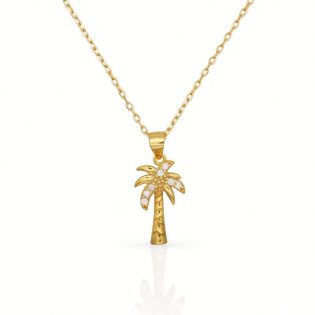
Resort Palmtree Necklace
$64.00 -

Oceanside Sparkle Studs
$38.00 -

Coin Necklace
$34.00