Astonished onlookers first laid eyes on the Miura P400 at the 1966 Geneva Motor Show, and with its unveiling, Lamborghini’s future classic was born. The Miura broke all the rules. It was the invention of three twenty-something visionaries—Gianpaolo Dallara, Paolo Stanzani, and Bob Wallace, who worked under Ferruccio Lamborghini in the formative years of the then-new marque, founded in late 1963. Now an icon of 1960s automotive design, the Miura P400 brought fame to the then-fledgling brand.
The trio’s after-hours project conceived a mid-engine two-seater with its V-12 power plant turned sideways, situated behind the driver in a box-section chassis perforated like Swiss cheese to enhance lightness. The perfectly proportioned chassis was clothed with a body unlike any other of its day. That task was left to Bertone designer Marcello Gandini—also in his twenties—who went on to create other style-defining supercars like Lamborghini’s famed Countach and Diablo.

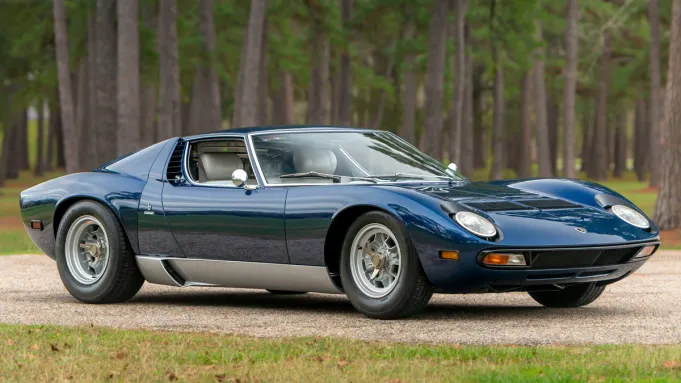
This 1971 Lamborghini Miura P400 SV sold for $3.58 million through RM Sotheby’s in 2023.
Robin Adams, courtesy of RM Sotheby’s
Those curious will want to know that the “P” in the car’s official model name stands for posterior, and refers to the placement of the engine, while “400” refers to the engine’s 4.0-liter displacement (more accurately, 3,929 cc). About 763 examples of the Miura were built from 1966 through 1973.
The Miura progressed through three model variants that began with the P400, about 275 of which were built through 1969. The P400 S was introduced toward the end of 1968, with 338 examples made through 1971. The most coveted, though, is the P400 SV, with about 150 examples constructed from 1971 through 1973. The “SV” in the Miura’s name stands for Superveloce, which translates to “high-speed” or “super-fast,” and with a velocity exceeding 170 mph, the SV was the hypercar of its era.

The impeccable condition of this example is the result of a four-year restoration.
Robin Adams, courtesy of RM Sotheby’s
Then there was the P400 SVJ (the “J,” or “Jota,” refers to Appendix J in the FIA’s racing specifications), a racing prototype developed by Bob Wallace. It was eventually sold to a customer and crashed, but the factory converted five or six Miuras to SVJ specification during, and after, the course of Miura production. So, unlike a large automaker whose output conforms to defined model years and specifications, when it comes to Lamborghini and its Miura, historians must look at the model’s development as a fluid and ever-transforming process, where parts from an earlier series might find their way into a later car, and vice versa, with plenty of subsequent updating on the part of the factory, owners, and restorers.

According to RM Sotheby’s, this specific car’s 4.0-liter V-12 engine was rebuilt by none other than Bob Wallace, Lamborghini’s former development driver.
Robin Adams, courtesy of RM Sotheby’s
At a glance, all Miuras appear similar, but the SV has wider rear wheels and wheel arches, revised taillights, and pop-up headlights that eschew the trademark “eyelashes” embellishing the first two Miura models. With the SV, Lamborghini increased engine output by 15 hp, bringing the total to 380 hp, and more significantly, the final 96 examples featured a split-sump aluminum engine block that separated the engine from the transmission, and the oil that lubricated both. This eliminated the possibility of metal shavings in the oil—a result of ham-fisted gearshifts—eventually destroying the engine. Some engines have since been modified with split-sump configuration to ensure longevity. On song and approaching its limit of 7,850 rpm, the engine delivers a sound that’s unforgettable.

Among the visual differences of the SV compared to other versions of the Miura are its wider rear wheels and wheel arches, revised taillights, and pop-up headlights sans “eyelashes.”
Robin Adams, courtesy of RM Sotheby’s
While Miuras—especially the SV—have always been the most collectible Lamborghinis, the marque had, for decades, never achieved market prices equal to Ferraris of the era. All that changed around 2011, when values took off and the Miura became the hot ticket it is today.
A Miura SV was the first Lamborghini to crack the million-dollar ceiling (something this writer predicted to CEO Stephan Winkelmann a year prior to the event). Today, a superb example can command approximately $4 million. Examples such as the 1971 Miura P400 SV shown here, which sold for $3.58 million at RM Sotheby’s Arizona sale in 2023, make a strong case for the Miura being the most beautiful—and blue-chip—postwar Italian sports car of them all.
Click here for more photos of this 1971 Lamborghini Miura P400 SV.

A 1971 Lamborghini Miura P400 SV that sold through RM Sotheby’s for $3.58 million.
Robin Adams, courtesy of RM Sotheby’s
Authors
-

Robert Ross
-
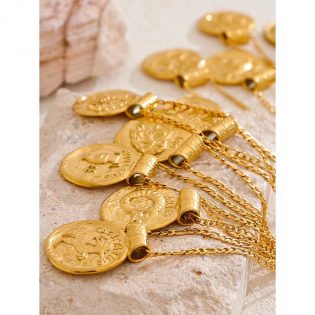
Coastal Coin Necklace
$34.00 -
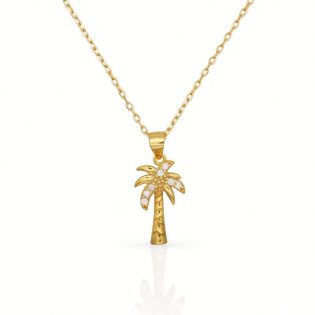
Resort Palmtree Necklace
$64.00 -
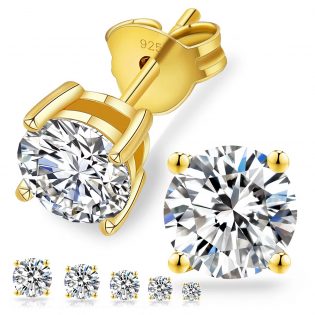
Oceanside Sparkle Studs
$38.00 -
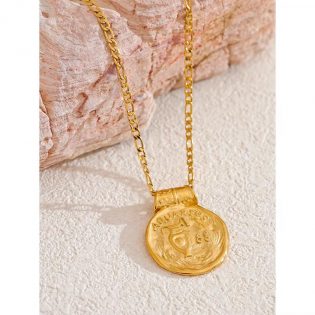
Coin Necklace
$34.00