

This story is from an installment of In the Loupe, our weekly insider newsletter about the best of the watch world. Sign up here.
The spring watch fairs in Geneva are two months out, but the first few days of February have already ushered in a slew of Swiss watch news with potentially big repercussions for different aspects of the trade. From high-profile management shuffles to new collections that hint at bigger themes, the stories that caught our eye suggest an industry in flux, as volatility in material costs, currency swings, and the ongoing luxury slowdown continue to dampen prospects for growth. Below are the headlines that caught our eye:
Stephen Forsey leaves the brand he cofounded in 2004.
In a recent statement posted on his Instagram account, Stephen Forsey, cofounder of Greubel Forsey, the prestige watch brand beloved for its rarefied horological creations, said that he’d been “regrettably disengaged” from his operations at the brand and his contract had been terminated. “I have since been liberated with immediate effect,” he wrote.
For an industry that values discretion, especially when it pertains to executive decision-making, the uncharacteristically candid post hinted at turmoil at the brand and left plenty of questions—particularly about what famously media-averse cofounder Robert Greubel has to say about Forsey’s forced departure. A follow-up story on Miss Tweed went on to say that Greubel Forsey “may be looking for buyers.”
It’s the latest sign that the Swiss are struggling in the current climate. In January, not only did TAG Heuer announce that chief executive Antoine Pin had left the brand after just 18 months at the helm, Richemont shuffled executives at the North American divisions of IWC Schaffhausen, Panerai, Piaget, and Roger Dubuis. The luxury group also announced that it had sold its Baume & Mercier brand to the Italian luxury group Damiani.

Greubel Forsey’s Handmade 1
Greubel Forsey
Audemars Piguet’s new jump hour model affirms a budding trend.
One of the most common critiques that AP has faced for the better part of a decade is its overwhelming reliance on a single product family, the Royal Oak (which, to be fair, spawned the Royal Oak Offshore and Royal Oak Concept lines, each considered their own collections). Notwithstanding the debut of the Code 11.59 collection in 2019, AP has long placed all its eggs in the Royal Oak basket.
Not anymore. At the AP Social Club press event in Le Brassus earlier this week, the brand introduced a genuine novelty: its new Neo Frame Jumping Hour, a rectangular model in 18-karat pink gold with a sleek black sapphire dial, drawing on the brand’s art deco history.
The jump hour mechanism emerged about a century ago, when “window watches” (Montres à guichets)—typically rectangular models featuring metal dials punctuated by a small aperture displaying numbers that “jumped” into place—embodied the era’s focus on clean lines and geometric silhouettes.
In 2025, the jump hour made its triumphant return with chic new models from Louis Vuitton, Cartier, and Bremont. With AP’s entrée into the category, it’s now officially a must-have style.
The U.S. drove Swiss watch exports’ December recovery.
Overall, the value of Swiss watch exports in 2025 totaled 25.6 billion francs, a decline of 1.7 percent compared with 2024. The figures reflect declines in the Swiss industry’s top three markets: China (12.1 percent), Japan (5.8 percent) and the U.S. (0.5 percent).
It’s worth noting, however, that exports notched an increase of 3.3 percent in December to 2.1 billion Swiss francs (about $2.7 billion) after four consecutive months of sharp declines. The monthly recovery was driven by strong growth in the U.S. (up 19.1 percent, which the federation attributed to the reduction in U.S. tariffs earlier that month), and France, which saw a 50.8 percent increase.

The Rolex Deepsea in gold.
Collected and Bezel release reports about the secondary market.
For further proof that the secondhand watch market is becoming more structured, look to two new reports published by Collected and Bezel, two platforms targeting buyers and sellers of pre-owned timepieces.
In its first survey, Collected, a new San Francisco Bay Area-based platform that offers contracts and other consumer protections to buyers of secondhand watches, asked nearly 100 respondents to answer a couple dozen questions about the market for used watches, including three free-form questions, Zach Scott, Collected’s cofounder and COO, tells Robb Report: What’s the best thing about the secondary watch market? What’s your biggest frustration or challenge with the way the secondary watch market operates? And if you had a magic wand, what’s one thing you would change about or add to your buying and selling experience in the secondary market?
“There was definitely a lot of consistency for that first question,” Scott says. “Honestly, it was resounding access to inventory, from two points of view. One was from people who may be interested in modern but aren’t interested in the AD experience”—referring to the waitlist and packaged buying that often accompanies purchases made at authorized dealers of brand such as Rolex, Patek Philippe, and Audemars Piguet. “And then the second theme was just access to vintage. For the biggest frustration, we saw that no matter if you’re going to identify as a dealer, or as a collector who’s buying or selling, whenever you’re in the seat where you’re buying something from an unknown party, you want protection.”
The Bezel report, by contrast, looked at the L.A.-based marketplace’s transactional data, authentication outcomes and ownership behavior. The report’s big highlight: “Bezel rejected 34 percent of the watches attempted to be sold in 2025. That’s a 5 percent increase from our 2024 Bezel Report (where we ended the year at a 29 percent rejection rate), and an 11 percent increase from 2023 (23 percent).”
In a big picture sense, the takeaway for buyers is that the used watch market’s Wild West days are numbered as more digitally native providers—such as the repair service WatchCheck—continue to bring more trust, transparency and confidence to both buyers and sellers of pre-owned timepieces.
Authors
-

Victoria Gomelsky
-
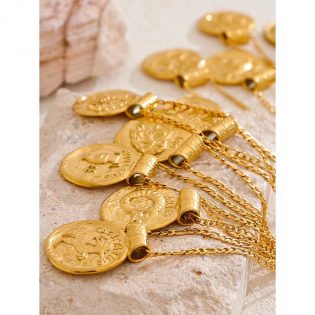
Coastal Coin Necklace
$34.00 -
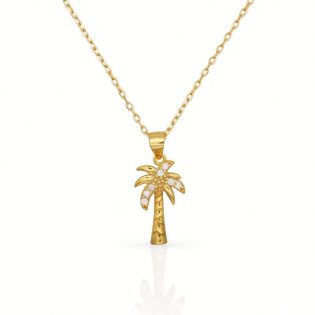
Resort Palmtree Necklace
$64.00 -
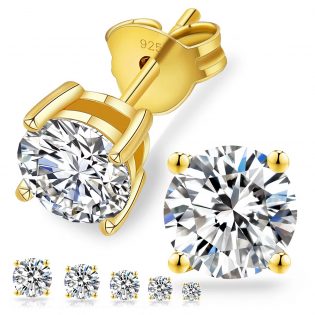
Oceanside Sparkle Studs
$38.00 -
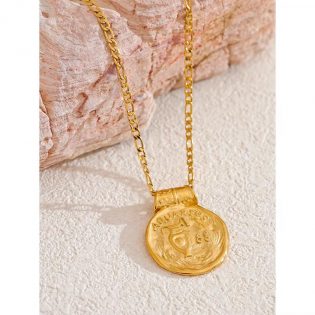
Coin Necklace
$34.00